

The same story plays out everywhere. You hire someone who seems great—friendly, knows basic medical terms, maybe worked in healthcare before. Three months later, you're back on Indeed.
The problem isn't the person you hired. Most chiropractic clinics hire for personality and hope competency follows. They run interviews like coffee dates instead of skill assessments. They onboard with shadowing instead of systems. When things fall apart, they blame the employee instead of their process.
Practices with stable teams do something different—they treat hiring and development as operational systems, not hope-based strategies.
The Hidden Cost of Wing-It Hiring
A chiropractic clinic losing one front desk coordinator every eight months bleeds $14,000 to $18,000 annually just in replacement costs. That doesn't count mistakes with insurance verification, mishandled appointments, or patient complaints during the learning curve.
The money isn't even the worst part—it's the operational chaos. Every departure takes institutional knowledge out the door. Mrs. Johnson's reminder preferences. Which insurance companies need special documentation. The workarounds that keep schedules flowing.
Most clinics respond by hiring faster or bumping pay slightly. Neither addresses the core issue. You get a revolving door of staff who never reach full competence before something breaks and they leave.
Clinics that escape this cycle invest more time building their hiring system upfront. They create a competency pipeline that transforms average hires into exceptional performers. Not through motivational speeches, but through operational clarity about success at every stage.
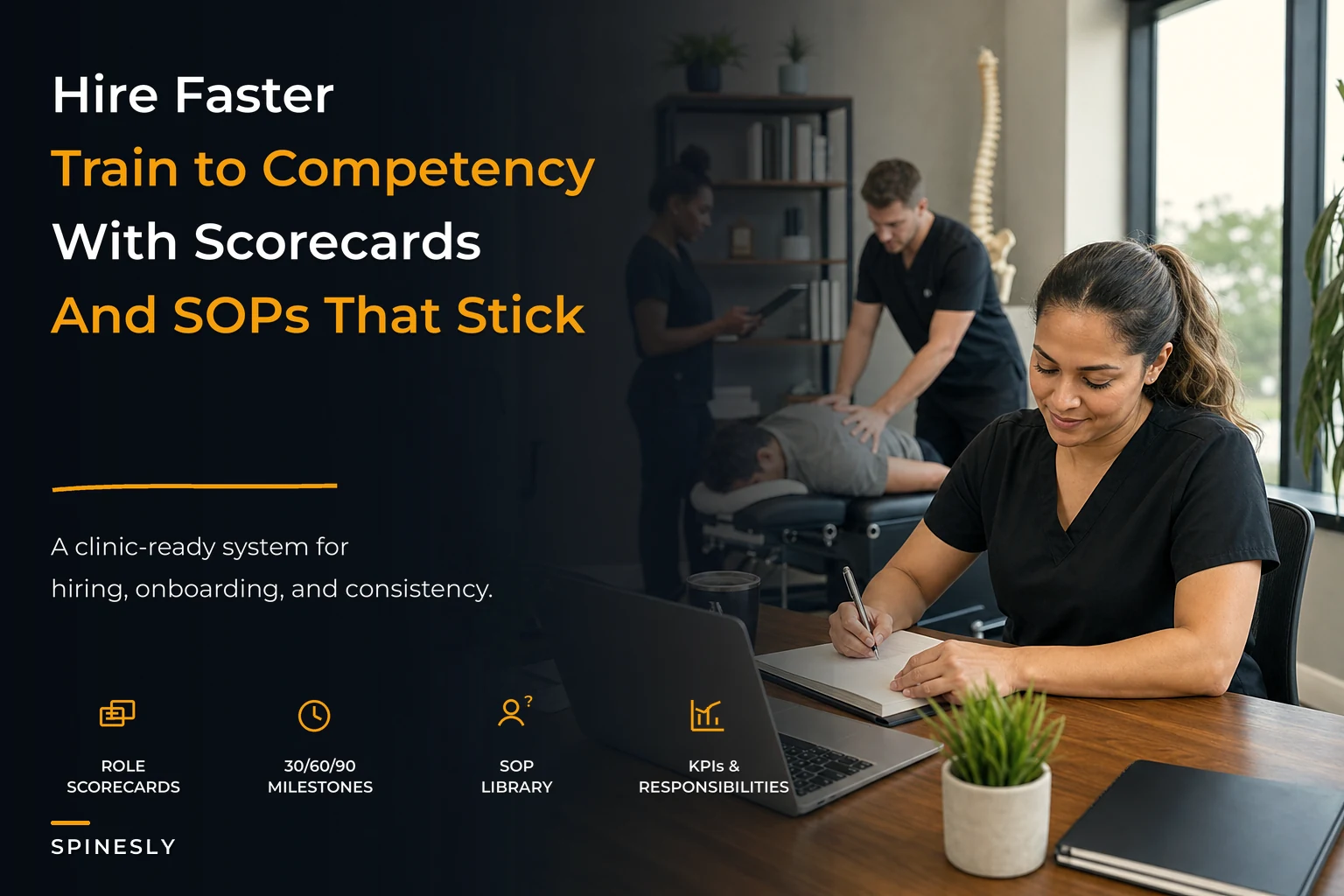
Building Your Job Scorecard System
Traditional job descriptions list tasks. "Answer phones. Schedule appointments. Verify insurance." That tells someone what to do, not how to excel. A proper scorecard defines measurable outcomes for each role.
Never miss another patient appointment.
Spinesly helps you schedule, confirm, and manage every patient visit efficiently.
- Unified appointment management
- Automated patient reminders
- Staff and resource scheduling
No credit card required
Instead of "manages patient scheduling," your scorecard specifies:
-
Maintains schedule density above 85% capacity
-
Achieves sub-2% no-show rate through confirmation protocols
-
Processes insurance verifications within 24 hours of booking
-
Handles patient concerns with first-call resolution rate above 90%
Each metric connects to clinic performance. When someone asks "am I doing well?" you both can point to specific numbers. No guesswork, no personality conflicts—just clear performance indicators.
The scorecard becomes your foundation for everything else: what to test in interviews, what to train during onboarding, what to measure during reviews. It shifts hiring from "finding someone who seems capable" to "identifying someone who can hit these targets."
For your chiropractic therapy assistant, the scorecard might include:
-
Prepares treatment rooms with 100% protocol compliance
-
Maintains patient flow with less than 5-minute wait times
-
Documents therapy sessions accurately within shift
-
Achieves patient satisfaction scores above 4.5/5
Each item is measurable, not subjective. You're tracking real operational outcomes that affect clinic success.
Interview Exercises That Predict Real Performance
Most chiropractic clinics run interviews backwards. They check experience, ask about goals, then hope for the best. Clinics with stable teams simulate actual job situations during interviews.
For front desk roles, hand candidates a mock schedule with conflicts. "Here's Thursday's schedule. Two cancellations just happened, three patients want to reschedule, and someone's calling about an urgent visit. Walk me through your approach." Watch how they prioritize, think about patient needs, spot missing insurance verification.
For clinical support positions, create a therapy room setup exercise. Give them procedures scheduled for the next hour and have them explain their prep sequence. Do they consider equipment placement? Patient comfort? Efficiency between appointments?
These exercises reveal more than resumes. You see real-time problem-solving. You spot whether someone gets flustered or stays methodical. You identify natural organizational thinking versus scattered reactions.
One clinic started using insurance verification exercises for front desk candidates. They'd provide a real (anonymized) patient case and ask candidates to identify what information they'd need to verify coverage. Exercise performance correlated with actual job success around 80%—way better than their previous "gut feel" hiring.
The 30/60/90 Day Competency Framework
New employees usually get thrown into the deep end with a week of shadowing. Smart practices build competency in deliberate stages, with clear milestones at 30, 60, and 90 days.
First 30 Days: Foundation Skills
-
Basic scheduling protocols
-
Phone etiquette standards
-
Insurance verification basics
-
Patient check-in/check-out flow
Don't pile everything on at once. These foundational elements should be practiced until automatic. Use simple metrics like call handling time and scheduling accuracy to track progress.
Days 31-60: Intermediate Competencies
-
Complex scheduling scenarios (double-bookings, emergency slots)
-
Insurance authorization processes
-
Basic troubleshooting for patient concerns
-
Coordination with clinical staff
This phase shows whether someone can handle the full scope. They should operate at about 70% independence by day 60.
Days 61-90: Advanced Performance
-
Process improvement suggestions
-
Training newer staff members
-
Handling escalated situations
-
Achieving full scorecard metrics
By day 90, you know exactly where someone stands. Either they've hit competency milestones and you have a solid team member, or you've identified specific gaps needing attention. No surprises, no vague disappointments.
This framework changes how employees experience their first three months. Instead of feeling lost and hoping they're doing okay, they have a clear roadmap to success.
Creating Your Role-Mapped SOP Library
Most chiropractic staffing SOPs fail because they're either too general ("be professional with patients") or too detailed (15 pages on answering phones). The sweet spot is role-mapped procedures connecting daily tasks to business outcomes.
Start with patient coordinator SOPs. Don't just document appointment scheduling. Map out:
-
New patient booking workflow (including insurance pre-verification)
-
Cancellation recovery protocol
-
Wait list management system
-
End-of-day reconciliation process
Each SOP should fit on one to two pages maximum. Use simple flowcharts when possible. Include specific scripts for common situations. Most importantly, explain why each step matters to clinic operations.
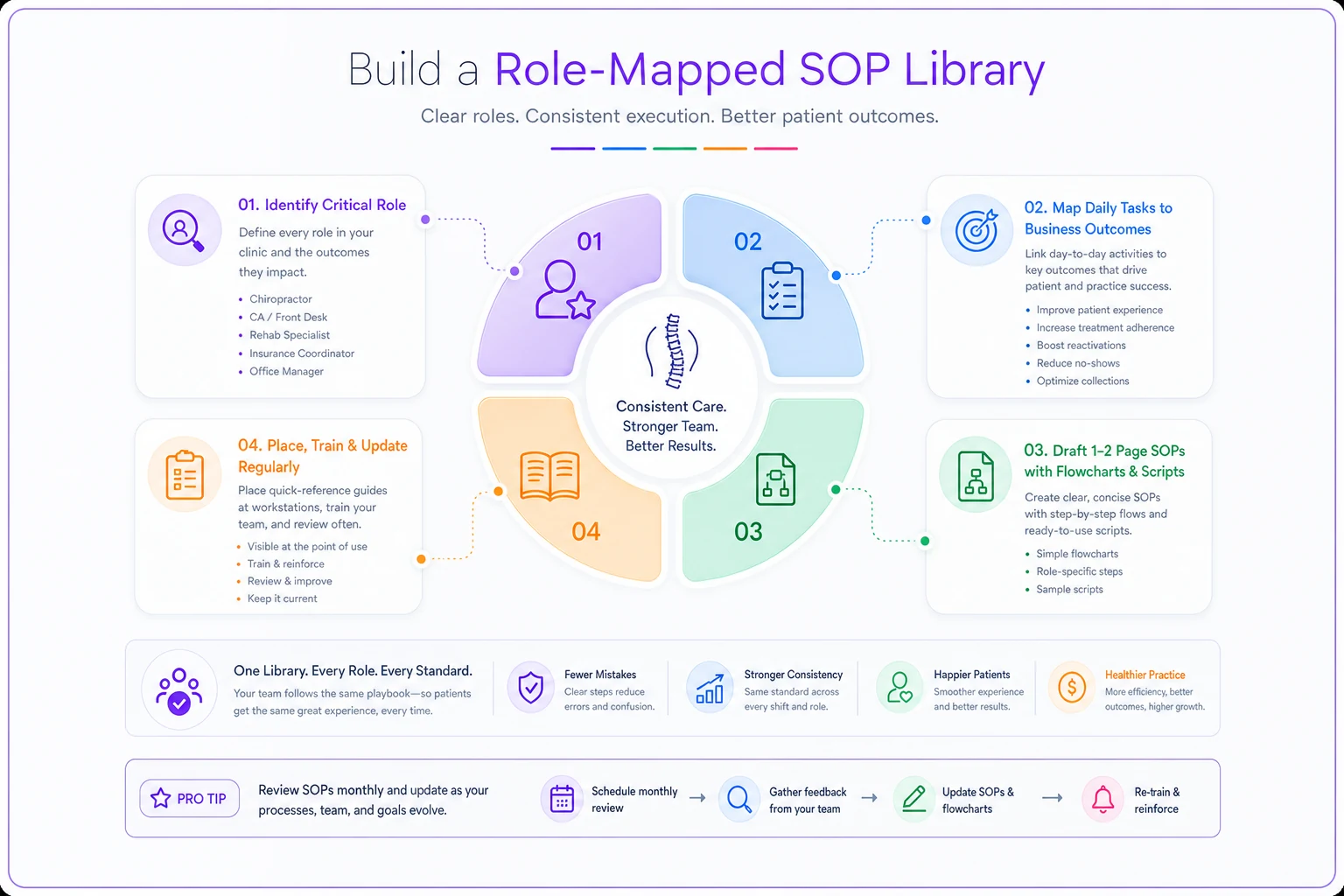
Use a simple visual like this to keep the SOP creation steps clear for your team.
Your clinical assistant SOPs might cover:
-
Room turnover sequence between patients
-
Equipment sanitization protocols
-
Patient positioning for different procedures
-
Documentation requirements for therapy sessions
Make these living documents that new hires actually use. Not binders collecting dust, but quick-reference guides they keep at workstations.
Start by documenting the five processes that cause the most mistakes so training fixes immediate pain points.
Build your library gradually. Start with five most critical processes for each role. Add new SOPs as situations arise. Within six months, you'll have comprehensive documentation that makes training systematic instead of random.
Connecting Systems to Scale
The beauty of this chiropractic staffing SOP onboarding system is how everything connects. Scorecards inform interview exercises. Exercises predict who can hit 30/60/90 milestones. Milestones align with SOPs.
When you're running a single-doctor clinic with three staff members, informal training might work. Add a second provider or open a second location? Informal breaks down fast.
Clinics using this framework go from constant 40% turnover to keeping staff for years. Not because they suddenly hire better people, but because they give average people clear paths to becoming exceptional at their specific roles.
Clinic metrics tell the story. When staff know their scorecard numbers, patient satisfaction increases. When new hires have clear milestones, training time drops about 30%. When everyone follows mapped SOPs, operational mistakes basically disappear.
Making the System Stick
The biggest mistake after building these systems is treating them as "set and forget" documents. Your hiring system needs maintenance like your adjustment tables.
Review scorecards quarterly. Are metrics still relevant? Do they reflect current clinic priorities? One practice discovered their front desk scorecard emphasized appointment volume when they really needed patient retention focus. A simple metric adjustment changed their entire hiring approach.
Update interview exercises based on actual job challenges. If new staff struggle with insurance pre-authorizations, add that to interview simulations. If patients complain about wait times, test candidates on schedule optimization.
Track correlation between hiring system performance and actual job success. If someone aces exercises but fails at the job, figure out what your system missed.
The maintenance isn't complicated—it just needs to happen regularly. Schedule quarterly reviews like any other operational task.
The Technology Integration Reality
Modern operational software transforms how you implement this staffing system. Instead of tracking competencies on spreadsheets, AI-powered platforms automatically monitor performance metrics and flag when someone's falling behind milestones. The same systems handling patient scheduling can track staff scheduling accuracy, creating real-time scorecards without manual calculation.
The thinking matters more than technology. Whether you're using paper checklists or sophisticated clinic KPI tracking systems, principles remain the same. Define clear outcomes, test relevant skills, build competency progressively, document everything.
Automation makes consistency easier. When your patient coordinator sees daily metrics on a dashboard, they self-correct before problems escalate. When training modules are digitized, every new hire gets identical foundations. Technology doesn't replace good systems—it amplifies them.
Building Your Implementation Timeline
Don't build this entire system next week. Start with one role—usually your most problematic position. For many clinics, that's the front desk coordinator interfacing with patients, insurance, and clinical staff.
| Timeline | Task |
|---|---|
| Week 1-2 | Draft your first job scorecard with 5-7 key metrics |
| Week 3-4 | Design two interview exercises based on real situations |
| Week 5-8 | Build your 30/60/90 framework for that role |
| Week 9-12 | Document your first five SOPs for the role |
After three months, you'll have a complete system for one position. Use what you learned to build systems for other roles faster. The second role takes half the time. By the fourth role, you can build the entire framework in two weeks.
Don't wait until it's perfect. Start using partial systems immediately. Your first scorecard doesn't need every metric—just the ones that matter most.
The Compound Effect on Clinic Operations
Clinics implementing systematic staffing see changes beyond retention. Patient satisfaction scores typically jump 15-20% within six months. Not from better customer service training, but because staff know what they're doing.
Insurance claim denial rates drop when billing coordinators have clear SOPs and competency milestones. Patient flow improves when everyone understands their operational role. Provider satisfaction increases because they're not constantly dealing with staff mistakes or training new people.
The real payoff comes when you need to scale. Opening a second location? Your proven staffing system travels with you. Adding evening hours? Train new staff using the same framework that built your A-team.
This systematic approach also changes performance conversations. Instead of vague discussions about "doing better," you point to specific scorecard metrics and SOP deviations. The conversation becomes operational, not personal. You're discussing business outcomes, not personality traits.
Beyond the Basics
Once your foundational system runs smoothly, you can add sophistication. Some clinics create competency-based pay scales where hitting milestones triggers automatic raises. Others build internal promotion paths showing exactly what competencies someone needs to move from coordinator to manager.
The framework adapts to different clinic models. High-volume practices might emphasize efficiency metrics in scorecards. Specialty clinics might focus more on protocol compliance. Cash-based practices might prioritize patient experience scores over insurance processing speed.
You can even use the system for provider recruitment. Create scorecards for associate positions. Design clinical exercises for interviews. Build 90-day competency ramps for new doctors. The principles scale up.
Clinics getting the best results treat their staffing system as competitive advantage. While competitors scramble to fill positions, they're methodically building exceptional teams. While others hope new hires work out, they're measuring and improving hiring success rates.
Your chiropractic staffing SOP onboarding system becomes a living asset that pays dividends every time you bring someone new onto the team. It's the difference between hoping for good staff and systematically creating them.
Ready to streamline your chiropractic clinic operations?
Join 1,200+ clinics using Spinesly to save time, reduce scheduling errors, and improve patient care experiences.